Now we can start tinkering what kind of innovation we, as Sailfish Community, can do together. The idea is that spec evolves in the docs.sailfishos.org and for software and other materials we’ll create a git repository. Regarding the initial TOH spec, please share your input.
Please note that any details at the TOH spec page are still under development and subject to change without notice.
Yes, it was mentioned in today’s community meeting, the STL files will be released soon, but it needs work. A week, maybe a bit more.
The files probably aren’t final, so they will come with a pretty big disclaimer. Maybe only for testing or prototyping or something, I don’t know.
Maybe I am misremembering, check the meeting text to fact check me if I said anything important for you.
I understand that space is limited, but would there be room for two additional pins for power and gnd? That would possibly address most concerns over wireless fast charging.
Under what conditions can you attach/remove TOH and what does that mean for power and gnd? Some connectors are designed such that gnd is established first, and power is present before signals.
Where is the cut-out for the cameras?
What constraints will TOH designers have to consider, to keep the phone’s functions? I’m mostly thinking of NFC, WiFi, BT and cellular.
(edit to add:) Is the ID resistor always powered?
When choosing the range for the ID resistor, will you consider its impact on idle power? Ideally, it should not be a significant fraction of the idle current for e.g. the cellular modem.
so i have no idea how any of this works, but wouldnt it be possible to add another, smaller battery into toh and charge that with higher wattages and use that to load the main battery once its full?
As mentioned before, please share some electrical information as soon as available, most important:
Connection sequence, eg must the TOH be tolerant for random pin connection or will power output (5V) start being provided as soon as ID resistor between the pin and GND is detected to avoid having 5V but no GND yet
Power recommendation: Can the TOH draw power within the specs as it likes or is there e.g. a suspend state where consumption must be limited
Pull devices on I3C are provided on the phone?
Is the port protected against malicious spikes etc on the lines?
And as said before, a TOH demo CAD 3D model one could use as base would be awesome.
I’m not an expert, but maybe someone, who actually something about things, could confirm or deny my believe that I³C is perfectly capable to transfer audio?
Isn’t that kinda how every e-ink display works?
What are these “urgent needs” that needs to be met? 15W? 25W? More? To me the current specs sound perfectly fine.
Of course, but there are some e-link screens; I looked into them a little. When I say “visually trackable” here, for example, you might put a notification, the weather, a few things, or a clock display behind it. This will work, in a way, not so much like a screen, but more like something that continuously receives commands. That is why this can be seen to some extent even in the old TOHD. The old TOHD can still be accepted, because for those years, with that mindset and the limited technology of that time, it was truly a very successful thing. However, nowadays, with the development that technology has brought over the years, people naturally want to see these things in a more flawless form. I just wanted to express this a little.
It would have been better if it were 15W. I’m a bit concerned about the power it provides. It says between 5W and 9W; maybe this could also be a variable factor that changes between 5W and 9W. I hope it can consistently receive 9W, because that would still be better. We actually cannot know without testing it. I may have criticized it a little early, and I accept that, as I said, we have not tried it yet. But, in a way, I am doing some calculations, and in those calculations, it kind of tells me that it is not really necessary—like, “What is the point of adding wireless charging?” In short, that is why I brought it up. Also, I think because I did not express it in a very gentle way, people understood it as an attack.
When I did my research, I concluded that, from the speaker side, this probably would not be something very high-quality. Some people may still like it because they are not looking for very high quality. So if someone is thinking of making it, they should definitely think twice.
Of course, some people may not care much, make one, and use it. But if you showed it to someone obsessed with sound systems, it could seem terrible to them. That is why we cannot know the exact result without testing it.
A friend told me I was criticizing it a bit too early, and I think they are right. We cannot really know without trying it. I only think that, based on my calculations, people should not expect something amazing. Someone else may not have that expectation, make it, and enjoy it. Tastes differ, of course.
You or any DIY other person can still do it in “more flawless form”. What or who is preventing that? No one force anyone to use e-ink. There are a myriad of display technology available.
Can you please explain what do you mean by this?
Very unclear. Accepted by who? By what?
Technical details please. As this is simply not true.
The HDR-DDR mode uses double data rate signaling on the SDA line with a 12.5 MHz clock to achieve a 25 Mbit/s raw data rate (20 Mbit/s effective). Wikipedia quote
So the I3C speed is not the limiting factor neither is the only communication available to TOH.
EDIT:
Who brought it? Source? To my knowledge there is no TOH available yet.
It’s pretty obvious you are disappointed with these initial TOH specs, but why?
Is there an abundance of phones available that will let you create your own back cover? Provide an interface that is open source that will allow you to design anything you can think of within the constraints of 9V & 1A?
It would of been impossible for Jolla to satisfy everyone with these specs, but they also could of just made a glued together brick with zero accessibility. However they didn’t, they brought TOH back from the grave for this wonderful Jolla community, and I for one am grateful.
Cheers to you @Jolla for the return of TOH, I hope we can put it to good use!
Of course, unlike other Chinese companies, they are not deceiving us. They are already saying exactly what it is, and I am not against that. The reason I said “send the email, get my money , Jolla” at the end of my first statement in this thread was exactly that. The discussion here dragged on a bit because of some friends. My intention was not to prolong the discussion. I may have seemed as if I was attacking a little, but my intention was not to attack; I was simply trying to say that it would have been better if it had been included. Later, when many people started writing, I got very tired. So, my intention was not to hurt anyone’s feelings. Thank you for your kind and nice explanation.
I thought there would be a USB port on the back for power, speed, OTG,… a real full hw development, in addition to a header. Let’s see what modules can come out with this ; starting with a Pi HAT.
Like we said, we are working on the spec. The spec is an initial spec of TOH which is a starting point and we’ll clarify and update on the way – stay tuned. Can we do hardware changes this late that is to be seen? With this you&we, Sailfish Community, can start tinker what one could do with it. It’s quite capable TOH! At the same time, please behave, respect each other and stay on the topic.
There are all sorts of possibilities already as one can read. Please, let’s work together and innovate . In my mind this will be awesome and I believe you’ll (we all are) be doing cool things with this!
It was quite a mess to read this thread, but I’ll just put my two American cents in.
I do not have wireless charging on my XA2 or 10iii. It was a shame I never had it. When I upgraded to my current Pixel Fold, I purchased a wireless charger. Over the last two years, I’ve had 5 or 6 times where the wireless charger did not actually charge my phone, leaving me to plug in when I went to work that day.
A wireless charger can be as fast as you want it, but if it doesn’t reliably work, it means nothing. Slow but consistent is preferable. 9W is fine.
If this isn’t satisfactory, and the spec doesn’t change from now to production, perhaps the wireless charging TOH should be a power bank TOH as well, compliant with Qi2 for fast charging, passively charges the phone, and since the spec supports both input and output, charging the phone over USB-C will route excess power to the TOH after the internal battery is charged.
The E-ink screen (or perhaps the persistent LCD “e-paper” screen) is infinitely useful and does not need to be fast either. The point of such a screen would be more as a psuedo business card or for dynamic branding, or as a QR code. There’s maybe value to having it as an efficient e-reader accessing the files in your Documents app, but it may still prove better to have a dedicated device for that.
I don’t see a need for a speaker TOH if the speaker included in the J2 is good from the start. Else, a good BT speaker, or a USB-C DAC would be a superior option.
Maybe a LoRA TOH to support mesh networking in rural areas?
The spec could absolutely have higher input voltage, but I don’t see any reason to go higher than 2A max in either direction (Qi2 and 2.2’s 3V and 5V input notwithstanding).
i3c should be able to handle multiple devices, right? What if other halves also expose the ports and enable stacking other halves? LoRA, extra battery, keyboard, wireless-charging, limited edition other-half THICC Jolla?
Not sure if it is really useful or even possible, but that would be awesome.
USB-C ports are notoriously weak. i dont know why, but multiple devices i use have usb-c ports that can’t handle the stress of repeated plug/unplug for even 2 years. in addition to needing to replace the usb-c port on my 10 III *twice*, i have to buy a new lenovo e14 gen1 every 2-4 years because the model is so old that theyre cheaper than the cost to repair them.
wireless charging for routine daily use, and fast charging for occasional use, would be ideal.
as an aside, i run a script 3 hours before i wake up that checks if the battery is over 90% and makes a noise if not. this was necessary when my usbc port was going out, and now its useful in case i forget to plug the phone in. it wakes me up just enough to plug it back in but not enough to stop me falling back asleep. it might be useful for wireless charging if its too slow or unreliable.
EDIT: usb-c problems are often caused by dirt building up in the port. this can be solved with a floss pick, compressed air, and professional grade isopropyl alcohol. i am NOT talking about this, but about the port itself, the solder joints holding it to the board, etc.
I think the highest priority was the keyboard, am I remembering correctly? By TPU, I meant that the thickness of the case could cause an issue with the wireless charging feature not making proper contact or not working properly. That is why I wanted to ask, in a way, whether the case situation was considered or not.
I think your example is very exaggerated, because you are kind of dismissing wireless charging. However, that technology offers these possibilities right now. Its practical usefulness may be around 50% today, but when we consider the possibility of its development in the future, it could rise to 80%.
For example, if data transfer over wireless charging had been successful, wouldn’t it have been an important step toward the dream of water resistance and a portless design? This was already being considered, wasn’t it?
Wireless charging is not what makes a phone look cool. Could the category you are trying to describe maybe be this: People do not really care much about the features of phones. Today’s phones already exist as status symbols. Maybe that is why you call it “cool,” I don’t know.
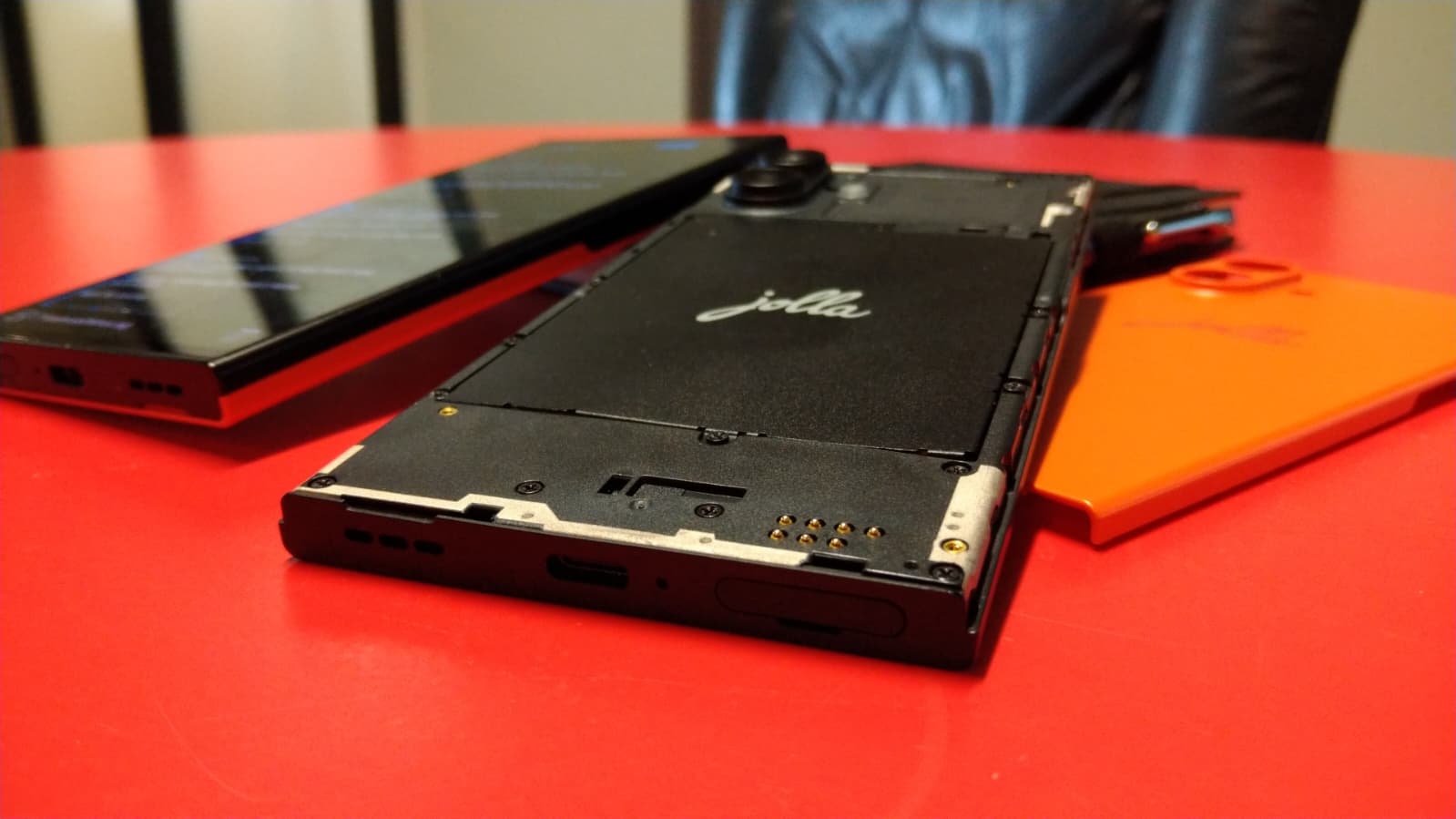

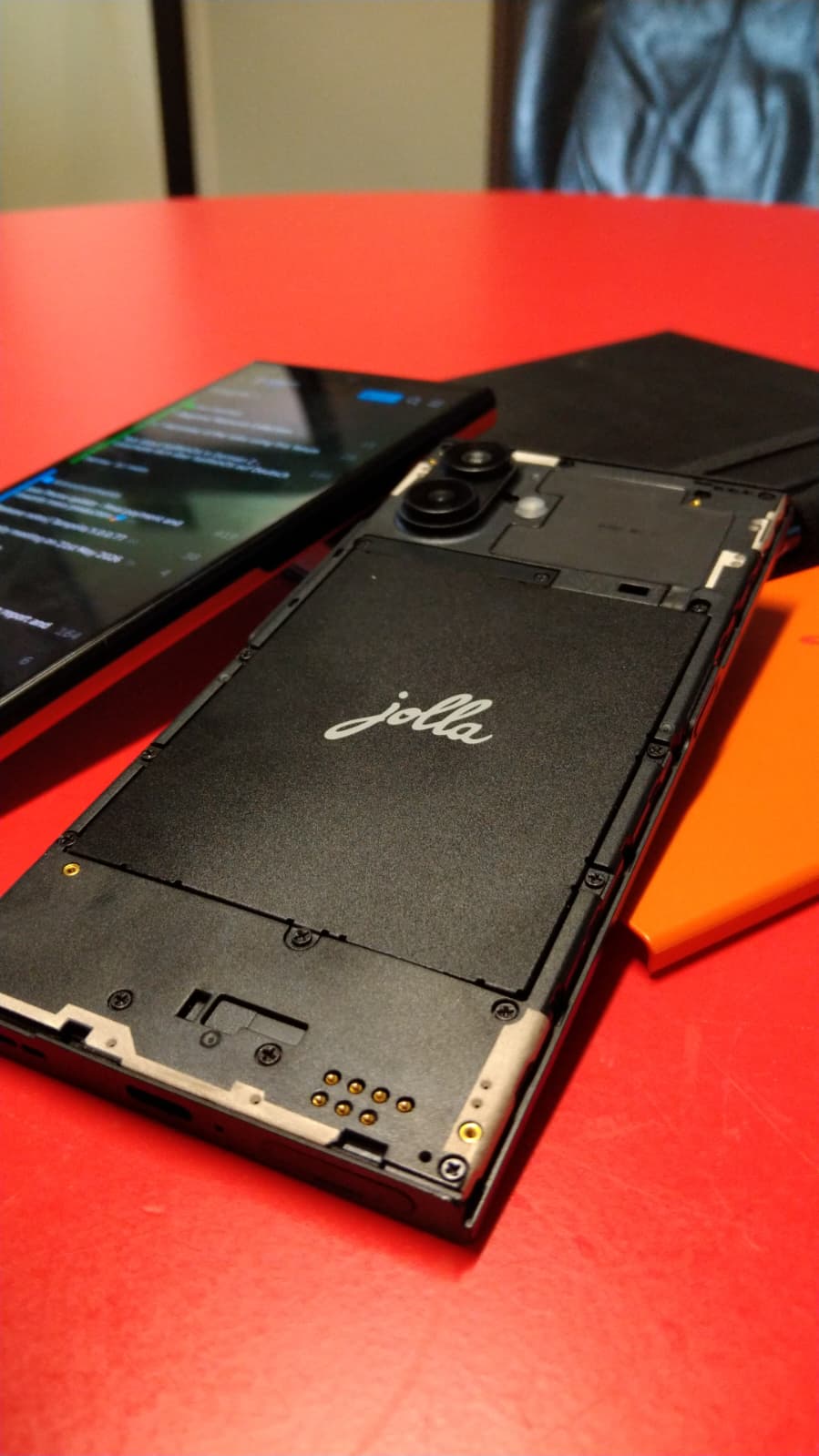
 . In my mind this will be awesome and I believe you’ll (we all are) be doing cool things with this!