“Charging current is limited to maximum of 1 A to protect the pogo pins”
I guess that means we can forget about wireless charging since that means 5-6 hours for a full charge if not even more?
“Charging current is limited to maximum of 1 A to protect the pogo pins”
I guess that means we can forget about wireless charging since that means 5-6 hours for a full charge if not even more?
I don’t know, i might not even mind for longer charge. Would still charge during a work day and night
At this point I would probably buy something like this for 10€ and shove it between the case.
Anyway, happy modding for everyone else!
That’s 1A at 9V = 9W, so quite a bit better than 1A at battery voltage - at least i assume they don’t just burn off the difference. Also, from what i can gather, most wireless chargers still only do 15W - so how bad is 9 really?
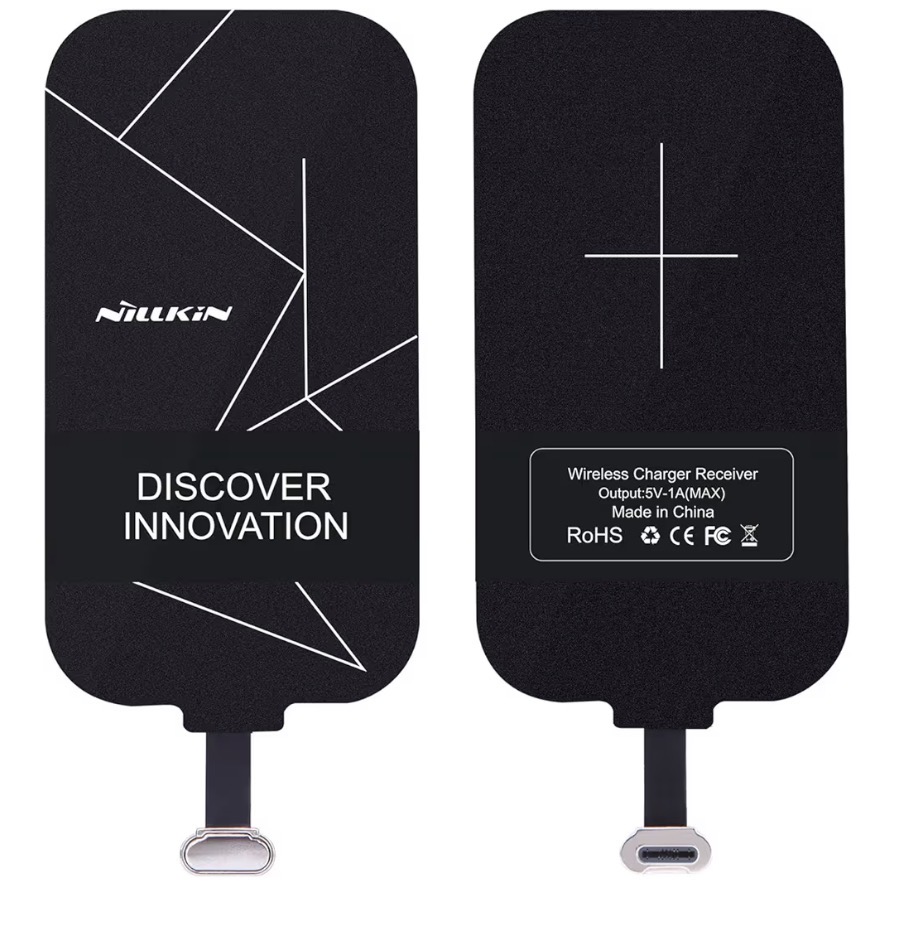
The specs of the pad on that image comes out to 5W.
Edit: herp-derp. Eat first, post after.
5V - 1A is 5 watts.
My MagSafe is 25 watts, but there are other devices with 30 or 50 watts wireless charging.
They do mention 5-9V, could the limit be 9W?
Edit: but, yes, it is quite limited.
Does this mean if I charge with my Samsung charger it will fry the Jolla Phone? I don’t understand what this mean?
No it doesn’t. When did that ever happen? This also has nothing to do with USB chargers.
Wrong voltage is what could fry something, but unless it is broken or very poorly made that is really not a consideration.
Current draw is fully controlled by the phone - up to what the charger can deliver of course.
It means fast wireless charging is not possible if you want to make a TOH for that.
Nothing relevant for anyone that doesn’t care about fast wireless charging.
And even if you do care that is theoretical for anyone that wants to make a TOH for that.
No, it doesn’t mean it’s impossible. It just means it’s limited to 9W. Still plenty of other uses cases then rapid charging.
Not so rapid charging maybe.
Well, I was referring to fast wireless charging. I don’t know what could be the other use cases for wireless charging. Either you have or you don’t, and either it’s fast or it’s slow.
There isn’t a specific number that defines what fast means in this case, but 10 years ago it was between 15-18 watts. Now it’s between 25-30 for many and goes up to crazy numbers but that is not the norm.
Anyway. I just pointed it out because it kinda ruined the idea for my ideal TOH. It never existed or promised so I’m just letting it go 
So, some people voiced concerns about the missing features, while others still considered this situation normal.
5–9V, max 1A
It would have been better if there had been no wireless charging at all. We do not use wireless charging just to charge the device while sleeping. When we go to a café or somewhere outside in general, instead of carrying a charger with us, there are now even tables in cafés like Starbucks that have built-in wireless charging. What do you think these are for? Do they put them there for no reason? They are placed there so people can quickly meet their charging needs, and isn’t that the reason why this feature is becoming more common nowadays?
We go somewhere, our battery is low, and there is already wireless charging on the table, so we think, “Let me put it there and let it charge as much as it can.”
5–9V, max 1A
With this specification, it will be very slow, meaning the feature will not actually be useful for us in a real sense.
I also think the E-link screen is a bit behind. Even if we make it a notification screen, constantly updating it will probably put too much strain on it. Some people in the group were discussing whether it could be used as a second screen, but that also seems almost impossible. When we use an E-link screen, I assume we will not get a true 60Hz feeling, but still…
Send the email, take my money, Jolla.
I don’t think it is reasonable to expect design changes of that kind that late in the development. Jolla is currently in the process of getting production started, isn’t?
That said, most current magsafe phones manage up to 15W, that is double of what that TOH connection can handle. The newest qi2 standard goes not beyond 25W. I feel that debate is vastly overnlown. 9W charges the fairly big J2 battery in about 2h.Most other phones need probably around 1h.
There are really e-Ink screens with 60 Hz refresh rate now? Last time I looked they were at 5 Hz or so, but that was a while ago.
The battery capacity is said to be 5.4 Ah. Charge times will depend on nominal cell voltage (battery chemistry) and charger efficiency, but the 9 W will be enough for a full charge in less than 3 hours. Edit: This is assuming that charge power is constant over 0-100% capacity. One should probably expect slower charging once reaching 80-90%.
A 20 minute coffee break will let you top up 12-15%. Whether that is enough depends entirely on individual needs.
(Edit: Assuming LiFePO cells and 100% charger efficiency results in a full charge in less than 2 h and a 17% top up in 20 minutes.)
It doesn’t really help us much at all. A lot of the TOH dreams we had thought about and imagined are falling through as well. And it is classified as having a 1A input. Normally, I know this to be 5W, or maybe it could be some absurd thing that varies between 5W and 9W. In short, the broad, imaginative dreams we were expecting for TOH have sunk to the bottom.
I already didn’t hope that they would change it, and I don’t think they will change it either. But it was unfair, because people’s expectations are gradually dying. The specifications of the first phone were more or less clear on average. People were expecting the processor to be a bit better; it turned out a little weak, but it wasn’t made into an issue. After that, there was excitement about the physical button actually being a real physical button, but it ended up being just software-based. With TOH, almost many parts of those big dreams we could have achieved have died. So many expectations are gradually dying.
I guess the last expectation will be whether the phone’s 90Hz screen is smooth or not. I hope everything goes well.
Some TOH ideas may not work, or may work with limitations, many will work just as in the dreams. People will use USB for fast charging and enjoy wireless charging for convenience, if and when such a TOH becomes available.
So, I think you’re catastrophising a bit here  even considering the disappointment of those who absolutely needed fast, wireless charging (and nothing else).
The 1 A is current, not power. What you “normally know” here is a mental shortcut disconnected from how electricity works. As absurd as it may seem, the power from 1 A may be anything between 0 and 400 kW using voltages frequently seen nearby ordinary people.
We could discuss some of that, but the topic here is TOH. Please take those issues to existing threads, or create topic-centered threads if there aren’t already any.
Could you please not speak for the rest of us (i.e don’t use the pluralis majestatis)?
Thank you.
Wireless charging is a dumb waste of energy anyway. With a plug we’re talking 98% efficiency, but with wireless the realistic efficiency when the device isn’t sitting precisely on the pad to an accuracy of a millimeter that’s only 60%.
I thought it was cool, charged my Lumia 920 with, but being an engineer I ran the numbers, saw how precise you have to be to get good efficiency and concluded that its a gimmick. Cool in concept, but in reality its deeply flawed. Kind of like the idea of commuting by flying car.