Do you approve of SfOS apps developed with AI
- Yes
- No
0
voters
After seeing this and many similar threads I just thought there should be a poll. Voting time: 1 month.
After seeing this and many similar threads I just thought there should be a poll. Voting time: 1 month.
I should’ve added a 3rd option: Yes, but it needs to be transparent.
Please no other points  if you say transparent, what it means exactly?
I can’t add more, I’d have to start a new poll.
Transparent = it needs to be clearly mentioned/labeled before installation.
Everyone should develop whatever they want.
Some people might not even care if their app developers know what they did or if the app is maintainable.
For publishing the app or announcing it though I personally would expect transparency and accountability. That’s it.
I don’t get why the fuck people are making such a fuss about it. Its a productivity tool and as long as you know what you are doing, the code is reviewed and you keep it open you can get good results in 1/10th of the time that would be required otherwise.
More quality apps the better.
You answered your own question.
People are annoyed when someone drops their work on a chatbot and ask it to do some things without even understanding what happened, and then it became a new thing that can’t even be reviewed.
When “AI written app” means exactly this for 3 times in a row here, excuse me but I don’t see it as “people using it as a tool”.
We actually talked about this even yesterday. Even if you say no to this, you clearly won’t be able to stop it. People are now developing apps with AI even for operating systems that have already reached the end of their life. AI has now become usable even for people who don’t know how to code.
The real thing to discuss here is this: Sailfish OS is very weak in terms of native apps. There is very little variety. In that sense, if many needed apps are made with AI, the variety increases and we can free ourselves from being dependent on the Android side.
The other thing that will bring risk is security. There are many SFOS users who care about security and privacy. This will be a threat for them. If the apps being made are not developed in a privacy- and confidentiality-focused way, then privacy will no longer mean anything for those users.
That’s why either someone needs to check these newly released apps and say whether they are suitable for privacy or not, or stores like Chum and OpenRepos should stop accepting everyone and letting them publish their apps freely, and instead check every submission before publishing it.
Otherwise, in the end, there will be many AI apps and none of them will have been checked. Honestly, I don’t want anyone getting into my private data, especially not some third-party person. For that reason, I would rather tolerate Google stealing it.
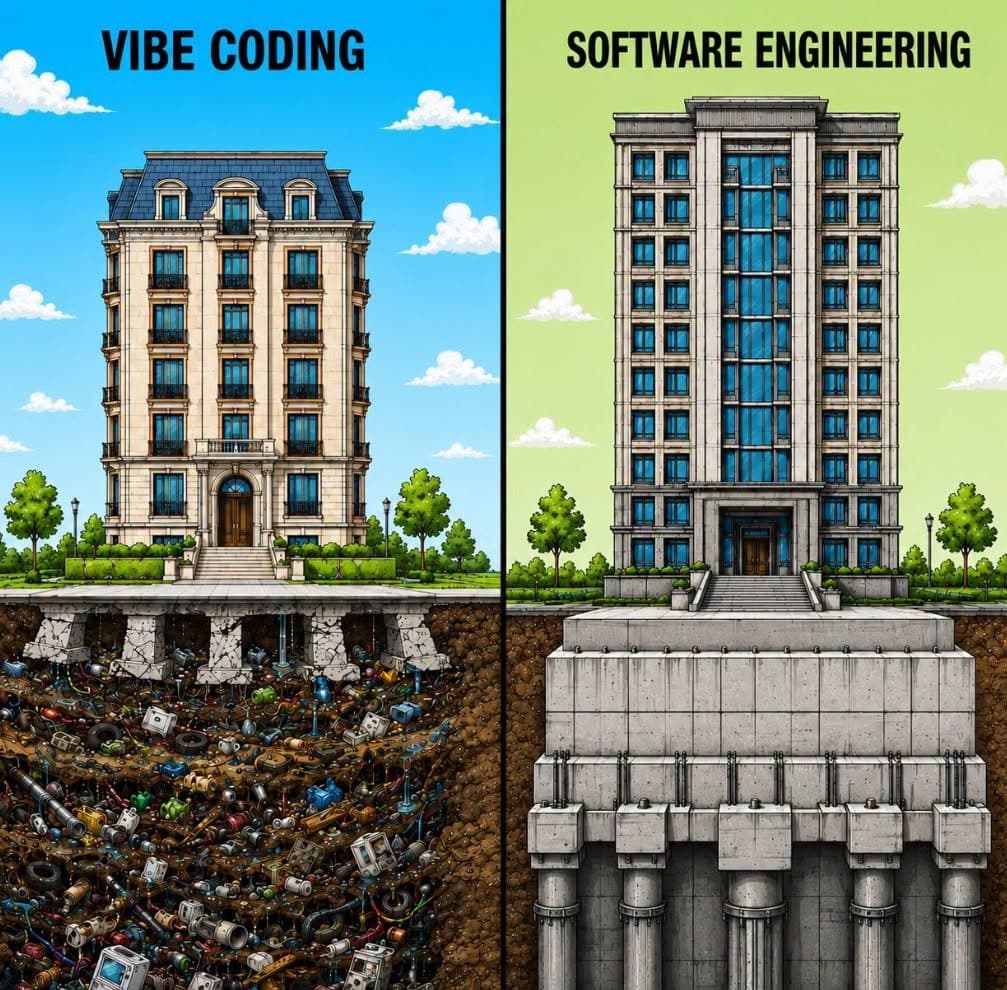
That’s the problem for me at least. When AI is used as an tool in software development (senior engineer myself) it can help a lot. But if it’s becoming the software development itself (vibecoding), that’s the bad part.
What more would i want on the piece of technology I have with me most of the day, containing all my sensitive and private stuff, than an app vibe-coded by someone who does neither check nor understand what the generated code does. Many of the worst findings in my last reviews came from developers that use AI excessively.
As always, there’s nuance. While I’m pretty sceptical to AI in general (knowledge and learning that gets lost, hallucinations, …) I think there are places where it’s really useful, if used in the right amounts. But if the question is, if I’d approve of vibe-coded apps … no, certainly not.
Mass vs. class. Fewer quality apps are worth more than dozens vibe-coded apps that appear nice on the surface, but have many problems, risks and let-downs once you take a closer look. At least in my opinion.
Yes, on one hand it can provide a lot of benefit, but on the other hand it also has the harms you described. However, don’t forget this: how many people are there in SFOS who truly know how to code and can write apps? That also needs to be taken into account.
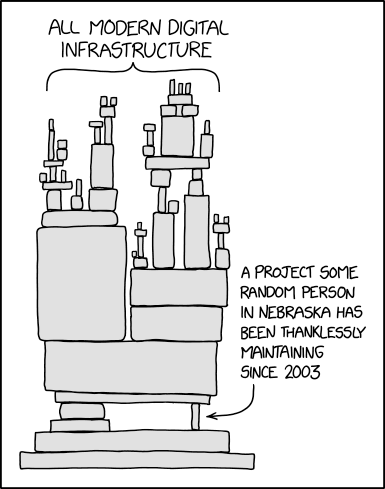
For example, when you go to places like Chum today, you see apps from 2021 or 2022 that have reached the end of their life, no longer receive updates, and are just sitting there almost like an archive. What I mean is that even the developers seem to have voluntarily stopped developing them back then and moved on with their lives elsewhere.
And that won’t improve with vibecoding. Tokens are expensive. Switching projects is easy.
Maintaining often costs (due to introspection of existing code etc.) more tokens than creating something new. And it’s not more exciting to tell claude/codex/whatever to “hey, maintain and update this code” than it is to do it yourself. Especially if you review the changes to ensure quality.
There won’t be more people that “truly know how to code and write SailfishOS apps” due to vibecoding. It will just look like that’s the case, while the actual number most probably will get lower.
I don’t think this is true and history proves it.
Do we not remember Heartbleed ?
Do we not remember Log4shell?
Do we not remember Garuda Linux NVIDIA script deleting user directory ?
All the NPM project using ‘is-even’ (still half a million download weekly)
Bad developer make bad code, Good developer make better code.
AI lower the entry level to the realm of developer, it also boosts good developer to make better and more code.
Digital photography removed most of the barrier of entry yet good quality photo still exist.
AI is tool, that’s about it.
I’m curious how you came to the conclusion that the number will decrease. Are you saying that because the number of people using SFOS is low, or is there another reason behind it?
I hope that’s the case. People were saying what you just said back in 2023 and 2024 too, but in the current era, it’s not really like that at all. Many things are now moving toward AI. “A good developer writes good code, a bad developer writes bad code” — these are now empty discussions when it comes to AI.
When AI’s real power valve is opened, that assumption will completely collapse. You know that, right? They have already explained AI’s real power. It is obvious from the start that software developers will lose their jobs.
That’s the AI marketing for you. When you need billions to continue you better say something big.
What I said was clear and obvious. I’m not against AI, but when you research the statements, goals, and direction of the people active in AI projects, your assumption clearly falls apart anyway.
From my observations: Most developers who heavily rely on AI for code don’t familiarise themselves with the components they are using. Their app uses framework XYZ because the AI has chosen it. They don’t read the documentation, they don’t investigate. If there is a problem, they tell it to the AI, which will then try to find a solution.
As said in my initial post: I’m fine with developers using AI as a tool for certain tasks, well dosed. Then and there it can be a great help, and in fact improve the developers understanding and work. But that’s the important part. A developer should still be able to do the work themselves, learn, understand and review what AI is telling them about/generating. Check, if it makes sense, steer back anything that might have derailed.
But that’s not the current trend. The current trend is that people without coding knowledge, and no intent to gain coding knowledge, tell an AI what they want, and hope for the best. That’s what i call “vibecoding”, and that’s what (in my opinion, and from my experience) is one of the most dangerous developments of our current time. It not only actively holds back humans from gaining new knowledge and expertise, it also comes with a lot of risks regarding operations, security and design flaws. But this post is already long enough … so i’ll leave it there.
For junior software engineers, which just fresh graduate from university or are in the last semesters I would to recommend not utilize AI. They should do more PR reviews with senior software engineers. Go into discussions with seniors, raise questions and talk to each other. Speak, understand, learn, improve.
All these points should still being doing as senior software engineers. But AI/LLM can speed up the velocity and also the quality of the code of the development process. As long the developer read the proposed code and does understand it, i do not see any problems. Especially, when they are doing tests, where you can check/confirm the input and output of a function.
I think it is really important to read and verify the code, no matter what the source is. I do not see any difference if a software developer use unchecked code from a LLM or from an unknown source of the internet (copy/paste).
So long story short: as long the (senior) software engineers read and understand the code, i am fine with AI generated code.
I do see also a great increase of documentation thanks to LLM.
When I started in IT as a software engineer some 45 years ago we were writing programs in assembly code, and often coding libraries or subroutines directly in machine code.
Then came programming languages like Fortran and Algol. These languages took the programmer further away from the coal face - no longer did they need to understand about registers, address spaces, and machine level instructions. They could use standard mathematical formulas, equations, variables, constants and conditionals (If/then/else).
Then we got an even greater level of abstraction in languages like COBOL where proper English words in almost formed sentences could be used.
Of course these were all procedural languages, not object oriented.
The point is though that each development took the programmer further and further away from direct interaction with the computer at its base level, and at a greater and greater level of abstraction.
I could still, today, program a 1960’s Elliot 803B mainframe in machine code (how I started out) because I understand intimately how it worked. Code had to be very efficient, compact and innovative because the machines were slow and magnetic core memory (RAM) hideously expensive. The 803 had a 39 bit word (plus one parity bit) and only 8K of RAM in total.
I doubt if very many modern developers would have a clue how to programme in machine code these days. A skill lost by the majority, but only because its no longer necessary.
AI coding models are just another layer of abstraction, taking the programmer still further away from the coal face - and human developers using these are just interfacing with a new ‘programming language’, but one based almost on conversations if you like.
So AI is a another new way of coding, developed in the 2020s, that will eventually make previous ways of coding obsolete. At its core this is no different to when Fortran or Algol came along and made programs quicker and cheaper to develop with less resources than it would have taken to write them directly in machine code or assembly language. So, not surprisingly, those old ways of doing things became obsolete.
Nobody is surely suggesting that we continue to write programs in the 2020’s in the same way, and using the same tools, as we wrote them in the 2000’s. That would surely be as ludicrous as a programmer in the 1980s still programming in machine code like they did in the 1960’s.
But, like any tool, you have to use AI properly, with due consideration to its benefits, risks and downsides. The same maxim of ‘Garbage In, Garbage Out’ that applied 45 years ago, still applies today.
Now some people will say ‘Ah, but AI is a massive step change over what we had before, so its very different’. And so it is, but people have short memories.
Every development in coding tools over the last 50 years has been a step change of one sort or another - Machine code and assembly language to high level programming languages, procedural coding to object oriented coding, the introduction of visual coding (e.g. Visual Basic - drag and drop elements onto screens and then giving them properties and code snippets), and so on.
AI is just another development in coding technology. And its here to stay. It cannot be uninvented, ignored, or dismissed as ‘slop’.
So we’d better get used to it and make it work the best we can.
I had to vote “No” because people don’t know how to use it.
Heck; i too would become complacent and miss things if everything was written by AI.
Fix your translator - maybe try one with AI.
Yes, but no.
The type of abstraction is very different. It is imprecise and random.
I stand by what i said - precious improvements are all deterministic.
Very true; but now people are encouraged and enabled to ignore it on a totally different level.
Would you say that the sudden progress with new Gecko for SFOS happened out of the blue after all these years? I would not be surprised if AI was heavily involved. But if it brings results why not, maybe it could be used to speed up the update to QT6 too?