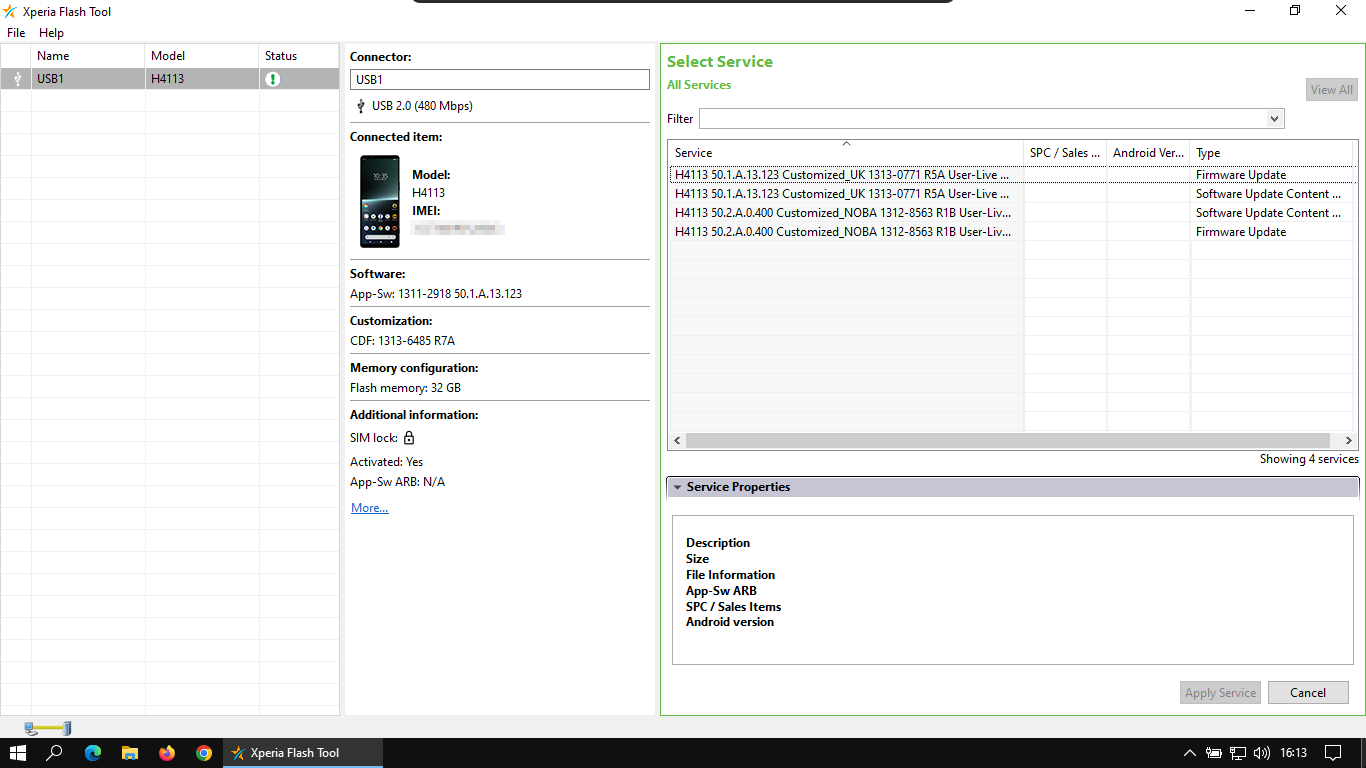
When I run the Emma tool I get the option to install Android 8 UK as “software update” or as “firmware”, and Android 9 NOBA, again as a “software update” or “firmware”. The software and firmware downloads seem to be the same size (1.8 GB for Android 9) and show the exact same “file information” - except that the “software update” says “erases user data”. I don’t mind if the user data is wiped, in fact I kind of want that to happen, but I don’t know if either option is better: Android 8 vs 9, UK vs NOBA, software vs firmware?
I’m also confused to see in the device information that my phone is supposedly “SIM Locked” - which I know it isn’t since I’ve used SIMs from different providers, even different countries, without issue.
I would be most grateful if someone could help clarify all this!
Edit: Perhaps I should add that I’m not at all fussed about Android app support; I’ve been a Jolla user since the Jolla One (and a MeeGo user before that), and I’ve never used the Android support - or indeed any other phone running Android. Yeah, I’m a stubborn *******.
Ah, I figured it must be some territory definition - Nordic/Baltic sounds reasonable, thanks! But are there any down- or up-sides to flashing Android 9 over 8, and what’s the difference between the “software” and “firmware” options?
I went with the H4113 50.1.A.13.123 Firmware Update (Android 8), which actually was the same that was already on the phone, so probably pointless. Just finished flashing Sailfish OS 5 (with the 17B Sony vendor image), and all seems well!
God I miss the N9 It was the perfect phone, with the perfect OS, and would have been just as good today had it continued to receive basic updates. Really, all it needed was regular browser engine updates, and security patches. Only the lack of 4G/5G support would have rendered it obsolete. Truly a thing of beauty, uncompromising design on every level. It could have wiped the floor with the iPhone had it been given a chance. People who think it was a failure tend to forget that Nokia didn’t get to launch it properly before the Elop catastrophe, and it was never made available in most countries. None of them have ever used it.
It felt solid as a brick, yet you just had to remove two screws - yes screws, not glue - and the screen could very easily be removed, giving you access to the innards and the replaceable battery. The coloured plastic shell was the same colour all the way through (that’s right, not painted), so scuffs and scratches didn’t make it look horrible. Mine looked almost as good after five years of heavy use (without a screen protector or case) as it did when new. It was on its second battery, which I’d replaced myself with ease.
The OLED screen had this incredibly useful feature that showed you the time & date and notification icons even when the phone was locked, without draining the battery (a unique ability of OLED screens; only the lit pixels use power). And you could even personalise this standby screen, with your own messages and icons! Man, it was soooo fricking cool, unbelievable - and very useful too! I remember always having it next to me on my desk, as a clock/calendar/message notification widget; all there at a glance.
And that’s not to say anything about the OS and bundled apps, which were all without exception incredibly slick, fast, user friendly and elegant. The maps app is still the best mapping application I’ve ever seen, with offline maps and public transport information built in from the start. The street names would slide smoothly along the roads as you panned and zoomed, ensuring you always had them in view. Nokia had actually bought a mapping company just to get the data and skills to build this incredible application. I remember being in Bilbao for the first time, having downloaded the map of Spain in advance and I was astonished to find that it had every tram and bus line already there, with every stop and in the right colours. When you clicked on a line’s number it would show you how the line ran on the map. Smooth and fast, without roaming data.
The way you operated the UI by swiping and making gestures single handed… So intuitive, easy to use even when holding on with one hand on a packed tube train rattling along. Oh man. It’s impossible to convey just how astonishingly fabulous this device was to anyone who hasn’t tried it out themselves.
I was a bit sceptical first because of the pink accent, coming from maemo, but i loved it. Podcasts still work today, as padcasts are just rss feeds and the rss app is just perfect. Also one can put mastodon on the notification screen, because it’s also regular rss. So nice. One only has to install tls 1.2 and the new ca certificates from the forum
IT HAD A FRICKIN FM RADIO TOO. And NFC (pretty sure it was the first phone to have this). USB host mode (with a bit of hacking). A full Linux terminal shell, built in! And SSH! And VoIP! Drives me mad when I think about it

 It was the perfect phone, with the perfect OS, and would have been just as good today had it continued to receive basic updates. Really, all it needed was regular browser engine updates, and security patches. Only the lack of 4G/5G support would have rendered it obsolete. Truly a thing of beauty, uncompromising design on every level. It could have wiped the floor with the iPhone had it been given a chance. People who think it was a failure tend to forget that Nokia didn’t get to launch it properly before the Elop catastrophe, and it was never made available in most countries. None of them have ever used it.