Then that wouldn’t be difficult to add as a value if it’s of interest for users! 
You’ll need a better formula if you want to account for ISO, so:
- ISO 100: N²/t = 2^15 = 32,768 → f/16 (256) at 1/125 s
- ISO 200: N²/t = 65,536 → f/16 at 1/250 s
so where N = stop number and t = time
Or 2^EV × (ISO/100) but that’s not a measure of lux, per se EDIT, just stick to the first since it will always be approximate.
For the sake of completeness:
My interpretation of this application note is that you can directly connect I2C and I3C devices to the same physical bus, if all I2C devices abide by the I2C specification and therefore have a 50-ns deglitch filter on their SDA and SCL pins, which will make them ignore any I3C communication at higher clock speeds. However, since you cannot be fully sure if your chosen I2C devices really have these deglitch filters properly implemented in their designs, you’d better separate them from your I3C devices in any case. So yes, one additional component that needs to be managed by the MCU - but only if you want to mix I2C with I3C devices, I guess. If you only have I2C devices in your TOH, you can hopefully switch to I2C-only mode in symbiosis.
True. I totally neglected that. Another bus target required to flick these additional pins between High and Low (and maybe additionally also Tristate)…
On the other hand: If the TOH only needs to be powered while its companion app is running, you could just brutally switch off its power supply when you close the companion app - for simple TOHs at least. See question 3 in this post.
You mean you would like to have at least 2 physical I2C/I3C busses on the TOH? One for the actual data transfers and a separate one for controlling the devices which flick the additional power management pins, etc.? Or are you refering to some currently existing shortcoming in symbiosis or somewhere else in Sailfish OS?
I’m referring to this. Symbiosis is designed in such a way as to expect a monolythic single adress to speak to.
Hmmmkaay, I didn’t expect this. That’s a bummer. A pretty big one IMHO. 
I thought that we could solder as many I2C and I3C devices onto the TOH bus as we wanted (each device with its own target address of course) and then, apart from all the D-Bus magic and other such stuff, also be able to simply use command line tools for talking with them. Something like:
-
toh-read --target 0x1A --register 0x2B --speed 400kHz -
toh-write --target 0x3C --register 0x4D --data 0x5E --speed 1MHz
Well, I think that is still possible, but we’ll have to supply some management. It is early days and the daemon is still like an alpha. It might also be possible with raw devices to just work around the daemon and do bit banging like @cypherpunks did in his python example. Since his script uses raw devices it’s conceivable that you can deal with numerous, unique ID devices as it is. It just won’t be so easy to integrate this with the system.
The documentation for symbiosis was updated: Symbiosis: Source code and documentation - #28 by tomin
I only took a quick glance, but from what I saw, you can add the target addresses of all your devices on the TOH bus through config files. I wonder: Could these configs also be created and loaded/unloaded dynamically (i.e. non-persistent)? I’m again referring to a set of command line tools that let you easily talk to several I2C/I3C devices on the TOH bus, even when the identification EEPROM is not present. For example when you are in prototyping phase and just plugged some components together on a breadboard in a quick-and-dirty manner. And then, without having to write any config files first, simply start a terminal and manually hack in some commands (or execute a shell script) for testing your circuit on-the-fly. The following is a very simple mockup.
Switch on the power supply to the TOH:
toh-interface --power on
Borrow access to the I2C/I3C targets you want to interact with (NB: I’m assuming here that using different clock speeds for every target on the bus doesn’t cause hickups hardware-wise, but I might be wrong):
toh-borrow --target 0x1A --type I2C --speed 400kHz
toh-borrow --target 0x3C --type I2C --speed 1MHz
Now we can interact with these 2 devices from our terminal by using the toh-read and toh-write commands from my previous post (without the --speed parameter) in whatever way we want.
When finished, properly return the borrowed devices…
toh-return --target 0x1A --target 0x3C
…and switch off the power supply to the TOH:
toh-interface --power off
Such a workflow would be a tremendous help, especially during TOH development. And it adheres to the KISS principle when you just don’t want to deal with D-Bus and friends yourself (like me  ). Instead, the mentioned command line tools will do the heavy lifting for you in this regard. Even for productive operation after development is finished - for simple TOH designs at least.
@poetaster: Are you maybe interested to carry this idea to one of the community meetings (if you think that it’s also useful for you)? Electronics and MCU development is not my profession, so I surely couldn’t have that kind of sophisticated tech-talk with the people at Jolla compared to you.
As soon as my JP2 arrrives (I’m a batch 3), I’ll just start testing using the python technique from @cypherpunks and a test rig, as you suggest, of breadboard and devices. When I have some insight as to the behaviour, I’ll know better how to proceed.
Sooo, finally!
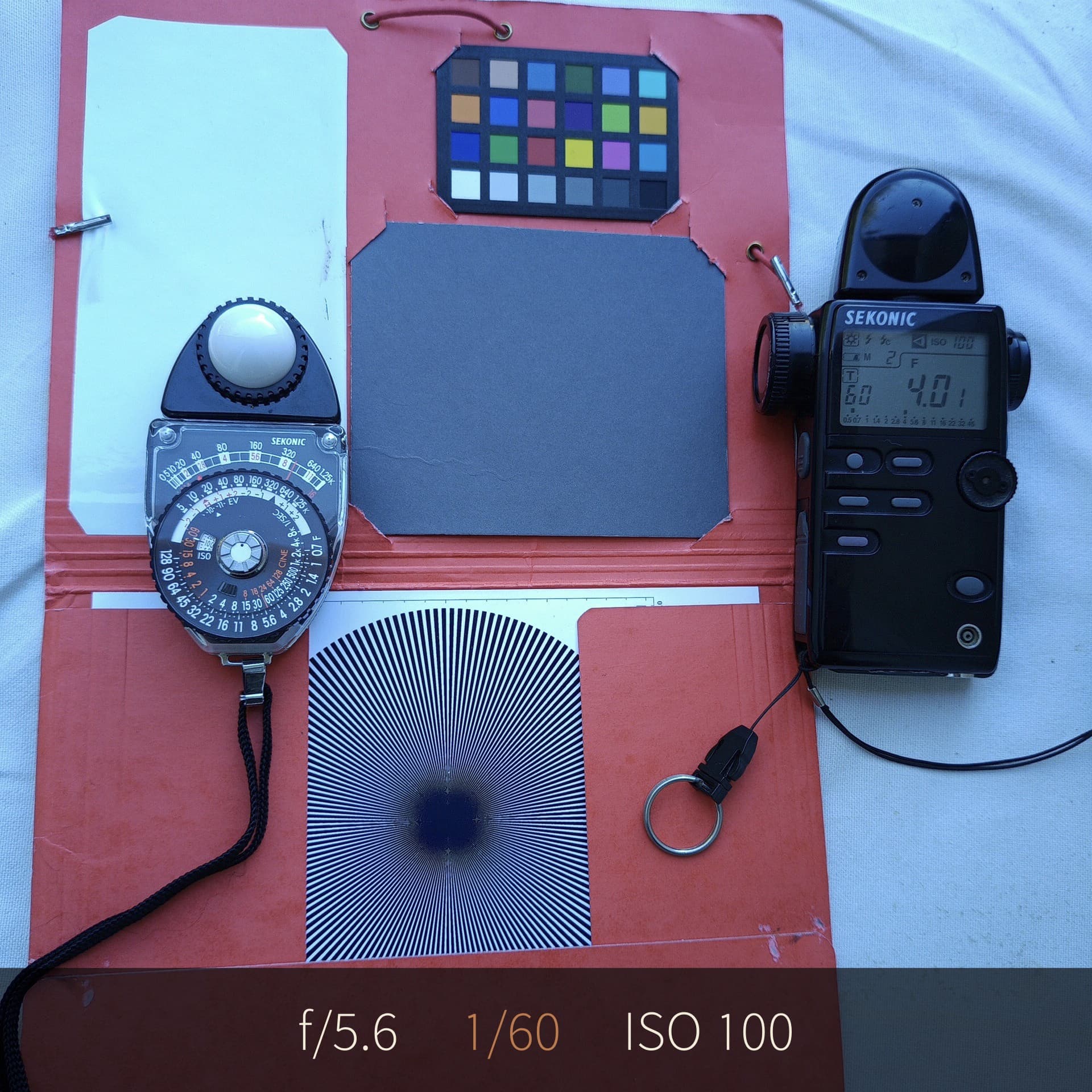
Under blue sky, no sun nor sun reflections.
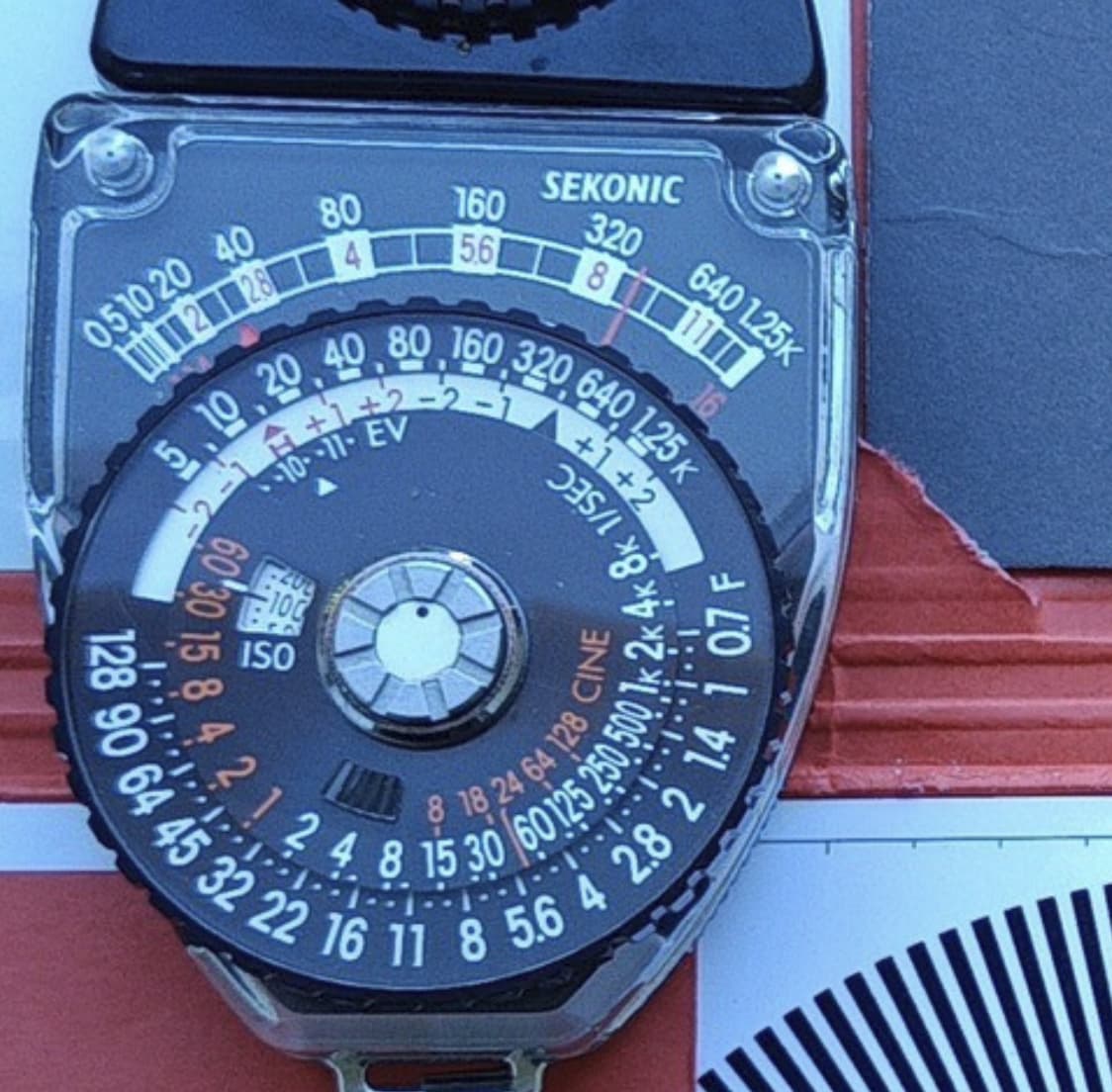
The meter on the left measured the incident (arriving) light in the center of the Kodak neutral gray card.
The meter on the right was set on spotmeter, to measure the reflected light, in the center of the card.
Both meters have approx 2/10th stop shift.
FiatLux (uncalibrated) shows approx one stop difference, used with the circle in the center of the card.
Same process as above.
A bit more than one stop difference between FiatLux and the meters.
With less light, but a mix between sunlight reflexions and sky.
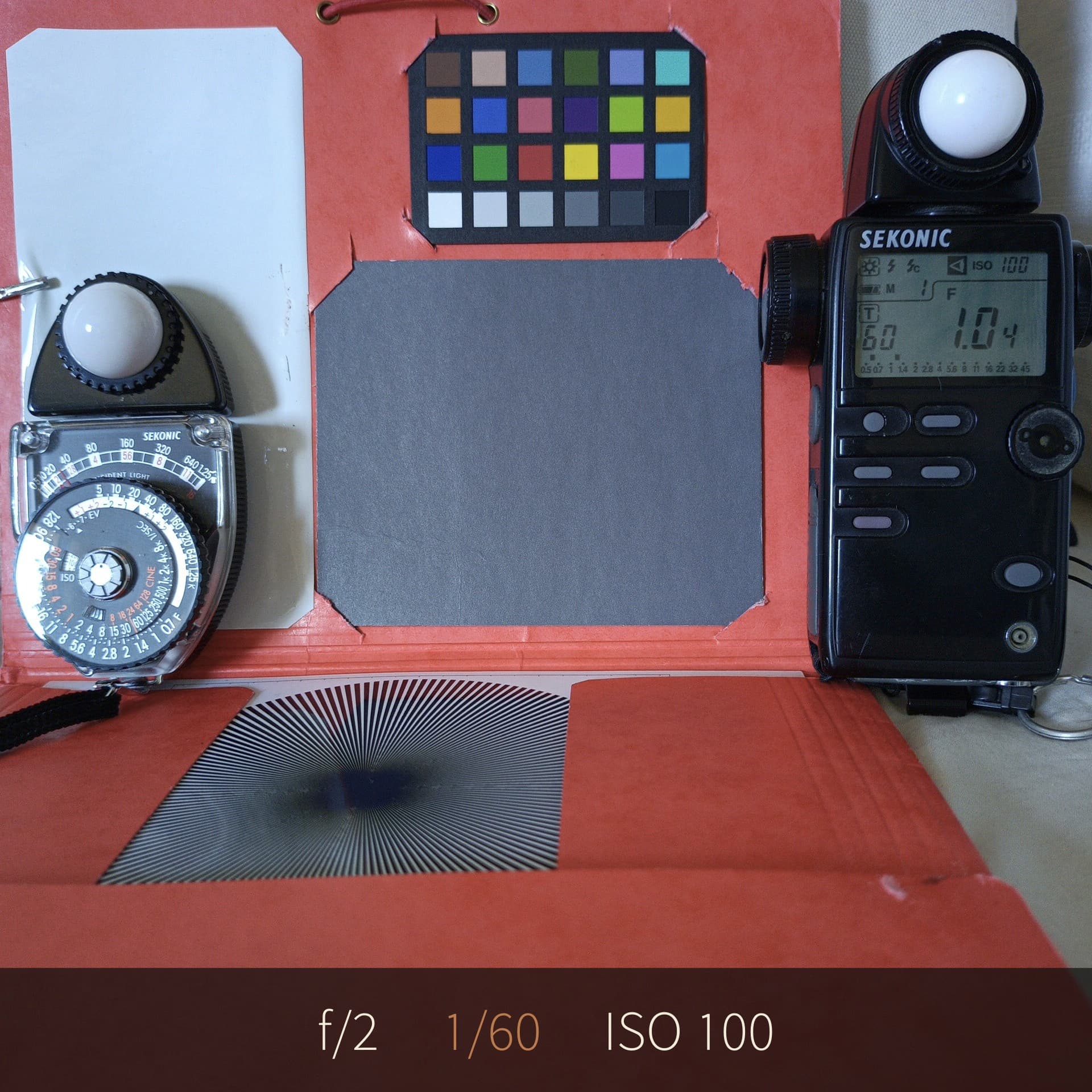
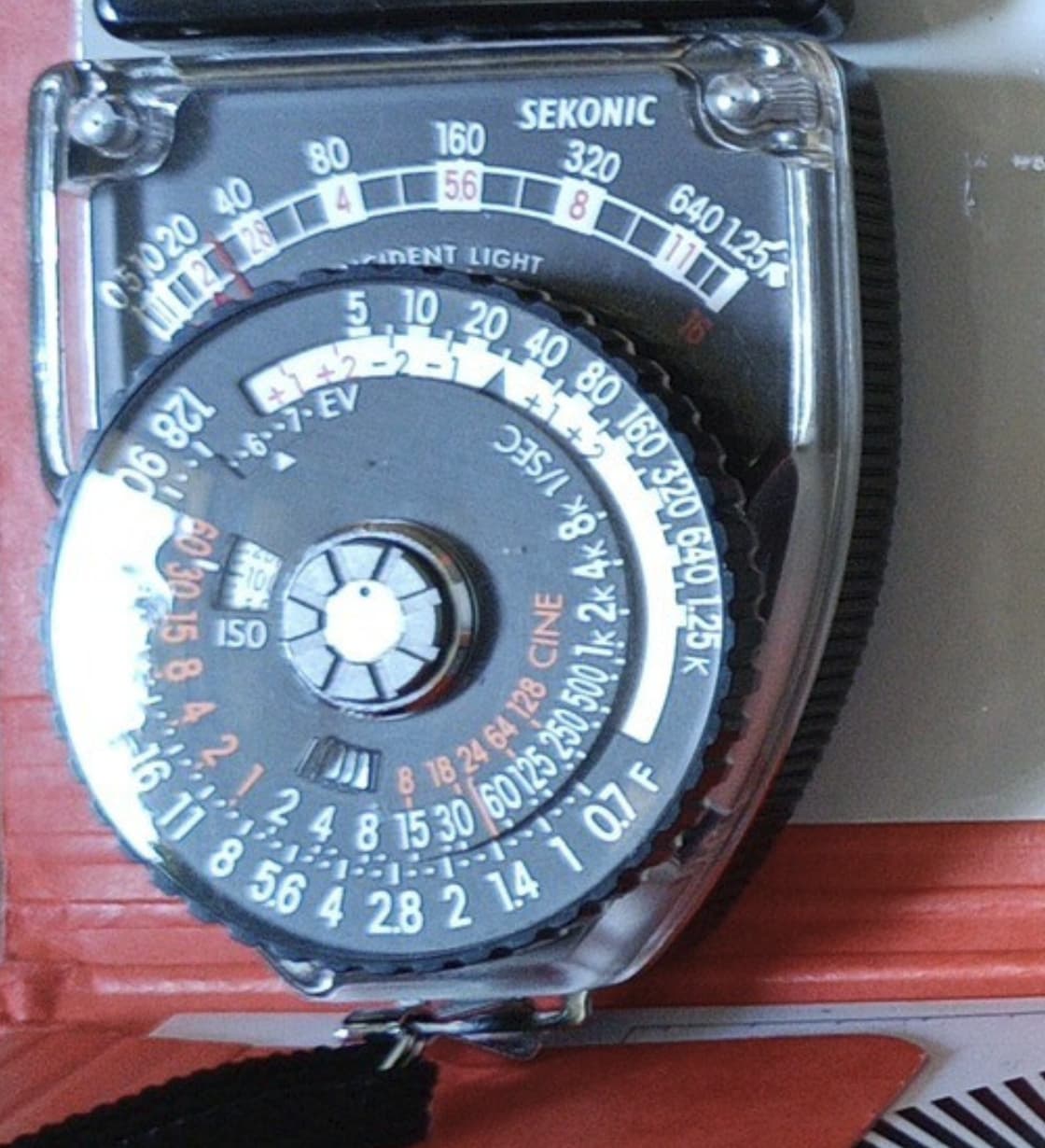
And one in the sun, same procedure (spotmeter was set to 100 ISO):
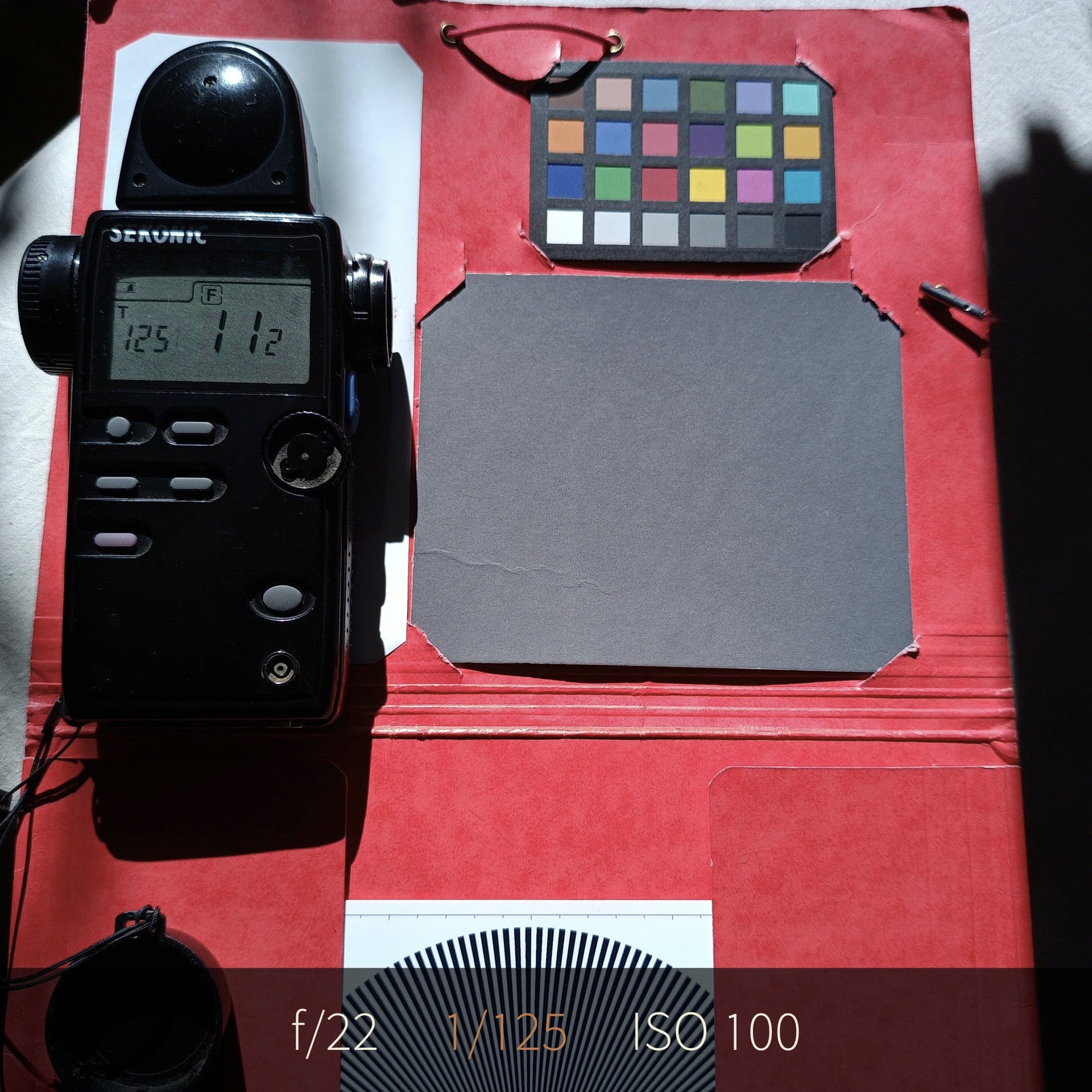
Here, the app indicated “1/3 underexposed”.
So I would rather suggest to correct the baseline with -2/3 of stops, instead of 1 full stop.
Btw, could perhaps be good if the photo capture would also integrate this over/under-exposition comments from the app, for more precision and correct memory.