I think the first step would be to compile telepathy-qxmpp.
hm, I hope, You know how ^^
as I understood QT6 is an issue for us, and maemoxmpp looks like not very supported over last years, no releases, no commits ..
I don’t use XMPP, but it’s a good opportunity to learn how to compile a software 
yes, this is one very important and difficult step, to compile initial basis 
I modified Livewire with AI so that it can manage multiple accounts.
I use it as daily xmpp client for the last weeks.
For me Livewire it’s fine at the moment.
Video and voice chats are not so important for me.
The patches are in the issues feed of Livewire repo.
i am not so expirienced with that. If I see 1,5 GB repo, what should I compile  And I somehow dont have good feeling with that, why so much data for an instant messenger without videocall support? then, I absolutely don’t have any expirience with rust. ah, not my playground

I hopefully, those changes/improvements will arrive in the next release.
Edit:
in comparison to Livewire is the repo of telepathy-qxmpp very transparent. It is clear, there is not the full XMMP implementation code inside, but looks more structured and clear. I hope also somehow fitts better to SFOS at the end.
@projectmoon : awesome app: thanks a lot!
I don´t know how to see muc, I used with my account on android with conversations.
sry, If there is a HowTo, I didn´t see
very nice app: again: thank you for your work!
The Livewire repository is 50 MB. Where do you get 1.5 GB from?
Downloaded the repo to my local machine wit gitclone, it was around 1,5gb. I will recheck and come back.
There is one subfolder in the livewire repo, that have same name liverwire, so maybe that is the thing. Do I need only that subfolder?
I did the same. It is 50MB. And the repo site says 58MB. What URL are you cloning?
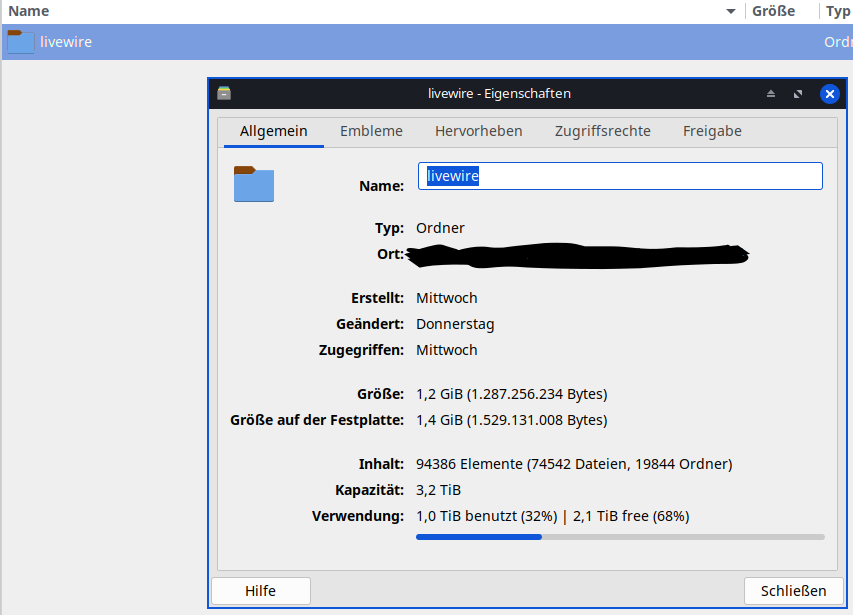
Seems like I forgot to recurse when I checked out the submodules. Anyways, most of the size is simply from vendoring maplibre-native-qt. There is like 50 MB if you ignore the vendor folder, which is simply libraries it depends on.
You can point the AI at sailkaidan and upstream kaidan and ask it to implement changes from upstream while keeping it qt5 and sfos friendly, shouldn’t really be a huge task for the thing that will replace all coders
Edit: and for proper integration you’d point it at GitHub - noonien-d/telepathy-gabble: XMPP connection manager based on telepathy-glib · GitHub and GitHub - noonien-d/share-plugin-telepathy: This Sailfish share plugin sends pictures via Telepathy file transfer · GitHub but this will come with replacing sfos native libs during testing and doubt the AI has good enough grasp of sfos stack, but who knows, adding features from upstream kaidan seems like the easier path
Edit: I replied to this post because I saw it was bumped while logged out. It is unlikely I will see further replies due to the thread being (and remaining) muted. For further discussion, the MUC or the repository are the official channels.
You can follow the exact and plan of development at the roadmap, as well as things going into the next release. Can’t get much more transparent than the exact list of what’s being worked on. Although this post did remind me to update the roadmap just now.
Development proceeds on both platforms simultaneously. I am currently using Sailfish OS on a daily basis, so this is the one that receives the most testing directly from me. Other people use the alpha version on Ubuntu Touch as well as Sailfish OS, and I check UT every so often.
Note that currently, the internals of the app are undergoing restructuring to remove the badly architected generated code. After that, work continues on Jingle and file transfers.
If you want to build the app for Sailfish OS, you can run sfos/build.sh aarch64 from the root of the repository. From a completely fresh clone of the repository, expect this build to take at least an hour, if not longer. Incremental builds take approximately 20 to 30 minutes on my hardware. This is due to a bug in sb2 that deadlocks cargo if used with multiple threads. It turns out, if you build lots of Rust crates on one thread, they build very slowly. But nevertheless, you will eventually be rewarded with an RPM.
The 1.5 GB of stuff is from maplibre-native and all of its dependencies. Building maplibre itself is fairly heavy and can take around 30 minutes on a ~20 core laptop. The final release build of Livewire is around 30-40 MB when packaged as an RPM, I believe.
Video calling: voice and video calls are not a simple matter, especially when the entire stack for it is more or less being created from scratch:
- Step 1: Jingle transfers (this is coming in the next planned release).
- Steps 2 through ???: Here be dragons. Probably more Jingle.
- Step ??? + 1: WebRTC stack, STUN/TURN handling, god knows what else.
Out of curiosity, what features do you think are missing, beyond the obvious large ones like calling and proper multiple account support? There are various other bits and pieces, like ad-hoc command support (which doesn’t exist in Conversations) and proper MUC configuration support. This information can be used to plan further items on the roadmap.
On Sailfish OS, go to the Directory in the pulley menu, and all contacts, joined MUCs, etc should appear there. Note that the MUC list uses PEP native bookmarks, with basic support for old type bookmarks.
You can find the further help in the usage guide under Settings → Help, in the Settings pulley menu.
Telepathy that sfos uses has support for jingle so it wouldn’t really be from scratch
XEP-0166: Jingle * Implemented (mid-2007 and current drafts), used for audio/video calls
XEP-0167: Jingle RTP Sessions * Implemented (mid-2007 and current drafts) implemented, used for audio/video calls
Thanks for detailed reply!
first of all, I anyway apreciate your work and I test your app since first day, that you shared this  and your app is getting good
Transparency of development:
If I say, the development is not transparent, I mean exactly fo me not transparent. you have lot of todos, they are mostly still open and when and how you plan to finish them is not understandable for me.
But for sure, the issue is on my side, as I said, I am far not app coder.
compiling of the code:
I thought you were supposed to load the code into the SDK and compile it from there. Unfortunately, building the app using a script is even harder for me to understand. Again, the problem is on my end—I just don’t have enough experience.
Map-libre code:
Ithank, I understood now, that these 1,X GB coming not from You, but still not understand, why such messenger app needs so much data in behind. Again, the problem is on my end—I just don’t have enough experience.
Alpha state of the app:
this is for me not about missing features, but about stability and saafety. Alpha state is defined by You. And for very active usage, I will always try to avoid alpha stated software. But I still test your app with my second account.
anyway, thank you for your great work!
Still, I think it wouldn’t hurt any of us if Jolla open-sourced the code and that led to the development of a system-integrated solution. I really hope that happens one day. And I hope that all the relevant expertise can be pooled together for that.